


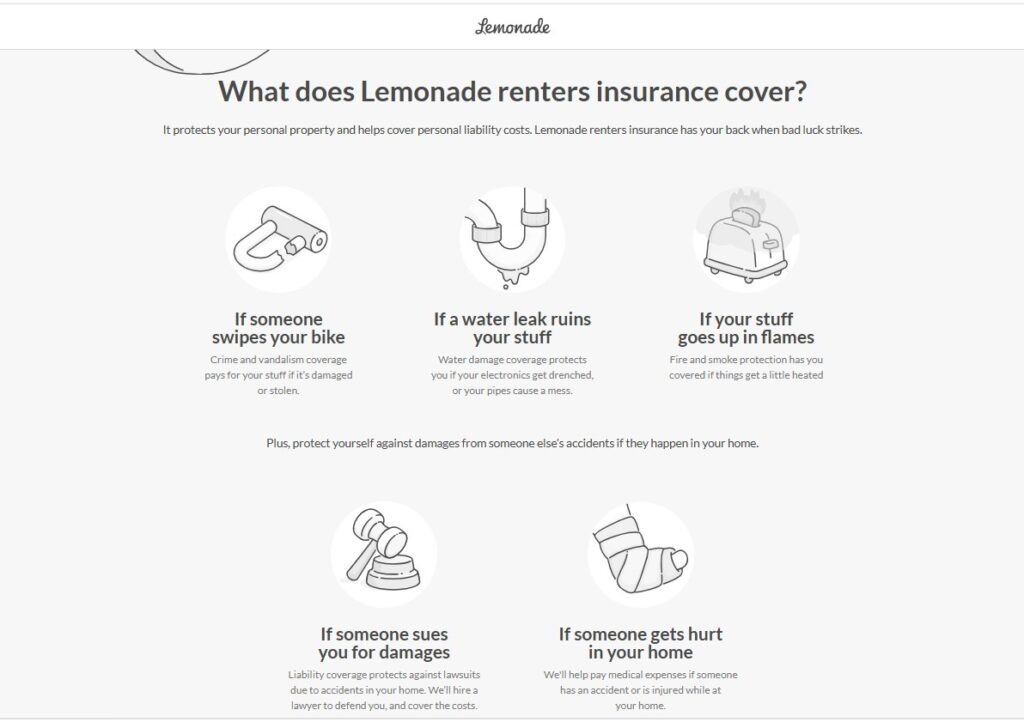
If you’ve ever rented an apartment and thought, “Do I really need renters’ insurance?” — the answer is a resounding yes. Renters insurance is one of the most overlooked yet valuable financial tools a tenant can have. It protects your personal belongings from theft, fire, and water damage, covers your liability if someone gets injured in your space, and even picks up the tab for a hotel if your unit becomes uninhabitable. The average renter owns thousands of dollars’ worth of stuff — laptops, furniture, clothes, gadgets — and none of it is covered by your landlord’s insurance policy.
That’s where companies like Allstate, State Farm, Progressive, and Lemonade come in. All four offer renters insurance, but not all of them offer it in the same way. The 2015-founded Lemonade is a tech-first insurance company that has completely reimagined what renters insurance looks and feels like. It uses artificial intelligence to get you covered in under 2 minutes and processes many claims in seconds — not weeks. With policies starting at just USD 5 a month, it’s no wonder renters across the country are making the switch.
In this article, we break down six key features of renters insurance and show you exactly why Lemonade is pulling ahead of the pack.
Pricing: Lemonade Makes Renters Insurance Actually Affordable
Allstate offers renters insurance at an average of around USD 21.50 per month, which isn’t unreasonable, but it’s on the higher end for a standard renters policy. State Farm comes in as one of the more budget-friendly traditional options, averaging around USD 13 per month — not bad at all. Progressive lands somewhere in between, typically undercutting Allstate but hovering around a similar range depending on where you live and how much coverage you need.
Then there’s Lemonade. With an average monthly premium of just USD 12-16 and entry-level plans starting at USD 5 a month, Lemonade is consistently one of the cheapest renters insurance options available. According to ValuePenguin’s analysis, Lemonade’s renters insurance costs around USD 140 per year on average — roughly 40% cheaper than the national average. The second-cheapest major insurer they compared was Travelers, which still came in 49% more expensive than Lemonade for the same coverage.
What makes this even more impressive is what you get for that price. Lemonade’s base policy includes USD 10,000 in personal property coverage, liability protection, and loss-of-use coverage. We’re not talking about a stripped-down policy that leaves you underprotected — it’s a full renters insurance package at a fraction of what legacy insurers charge. If your budget is tight and you want real protection without spending a fortune every month, Lemonade is the obvious winner here.
See on:
Claims Processing: Lemonade’s AI Can Pay You in Seconds — Literally
Filing an insurance claim is never fun, but the experience varies wildly depending on who you’re insured with.
With Allstate, claims can be filed online, through their mobile app, or by calling 800-255-7828 or visiting a local agent. The process is fairly straightforward for a traditional insurer, but expect the typical back-and-forth of documentation submission and waiting periods before you hear back. State Farm offers a similarly conventional claims process, with options to file through their app, website, or by calling a representative. Their customer satisfaction scores are among the highest in the industry, which means they handle claims reasonably well — just not quickly. Progressive follows a comparable model, with its app enabling digital claim tracking, but the experience can feel slow compared to what modern renters expect.
Lemonade operates on an entirely different level. When you file a claim on the Lemonade app, you’re guided through the process by an AI called AI Jim. You record a short video explaining what happened, AI Jim runs 18 anti-fraud algorithms in the background, cross-references your policy, and — in many cases — approves your claim in seconds. Lemonade literally holds a world record for processing a claim in 3 seconds. As of 2025, 96% of first notices of loss are handled by their AI without human intervention, and 55% of claims are fully automated from start to finish. For complex cases, a human adjuster steps in, but the vast majority of straightforward claims are paid out faster than it takes to order a pizza. If getting your money back quickly matters to you (and it should), Lemonade is in a class of its own.
See on:
The Sign-Up Experience: Get Covered in Under 2 Minutes
Shopping for renters insurance used to mean calling an agent, waiting for a quote, filling out paperwork, and hoping it all goes through in time for your move-in date. Not anymore — at least not with all four of these companies.
Allstate lets you get a quote online and purchase a policy through their website or mobile app, which is convenient. However, many users still end up speaking with an agent to finalize the details, which adds time to the process. State Farm’s online quoting tool is clean and functional, but the company’s traditional agent-first model means you’re frequently nudged toward calling or visiting a local office. Progressive offers one of the more user-friendly digital experiences among traditional insurers, with solid online and app-based quoting and purchase flows.
Lemonade, though, was built from the ground up for the digital age. There’s no agent, no phone call, no paperwork. You download the app, answer a few quick questions with their AI bot, and you can have a policy active and ready to go in under 2 minutes. The Lemonade app holds a 4.9-star rating on the App Store, which tells you everything you need to know about how users feel about the experience. One viral tweet summed it up perfectly: buying insurance from Lemonade was “easier than ordering pizza.” For renters who are moving fast and need coverage now, Lemonade’s signup process is simply unmatched.
See on:
Personal Property Coverage: Lemonade Pays for Brand-New Replacements
When something gets stolen or destroyed, the big question is: how much will my insurance actually pay me? The answer depends on whether your policy uses actual cash value (ACV) or replacement cost value (RCV).
Actual cash value coverage factors in depreciation, meaning if your three-year-old laptop gets stolen, you won’t get what a new laptop costs — you get what your old one was worth. Replacement cost coverage, on the other hand, pays you enough to buy a brand-new equivalent item. Allstate typically requires you to pay extra to add replacement cost coverage to your renters policy, as it’s not always included in the standard plan. State Farm’s policies often default to replacement cost coverage, which is a genuine advantage — but you need to confirm this when purchasing your specific plan. Progressive offers replacement cost as an optional add-on, meaning you may need to actively seek it out.
Lemonade‘s standard renters insurance policy comes with replacement cost value coverage built right in. That means if your USD 1,200 MacBook is stolen, Lemonade pays you enough to buy a new one, not the USD 400 depreciated value of a three-year-old machine. On top of that, Lemonade offers an “Extra Coverage” add-on for high-value items like jewelry, fine art, cameras, bicycles, and musical instruments. Claims for these items are completely deductible-free, and the coverage even extends to accidental damage and loss. This combination of robust standard coverage plus flexible premium add-ons makes Lemonade one of the most comprehensive options for protecting the things you own.
See on:
Discounts and Bundling: Lemonade Rewards Smart Shoppers
Everyone wants to save more, and discounts are one of the best ways to do it without sacrificing coverage.
Allstate offers a solid range of discounts for renters insurance, including multi-policy savings when you bundle with auto, a discount for protective home devices like deadbolts and smoke alarms, an easy pay plan discount for automatic payments, and even a 55 and older discount for retired policyholders. These options are well-rounded and cater to different kinds of renters. State Farm keeps its discount menu a bit leaner, primarily offering multi-policy savings when you bundle renters with auto, and a home alert protective device discount. Progressive provides bundling discounts when you pair renters with auto insurance, savings for going paperless, paying in full, receiving a quote before your current policy expires, and a discount if you live in a gated or secured community.
Lemonade‘s discount structure is clean and effective. We can save by bundling renters insurance with other Lemonade products like car, pet, or homeowners insurance. The app also rewards protective devices — things like deadbolts, burglar alarms, and smoke detectors — with a premium reduction. In some states, paying annually instead of monthly unlocks an additional discount. What sets Lemonade apart here isn’t just the discounts themselves — it’s the seamless way everything is managed within one app. Bundling all your insurance with Lemonade means one dashboard, one login, one company to call, and one place to track your coverage. That kind of simplicity has real value for renters who already have enough on their hands.
See on:
Social Impact and Transparency: Lemonade Gives Back What It Doesn’t Use
This is the feature that no other renters insurance company in this comparison can touch, and it might be the most compelling reason to choose Lemonade.
Allstate, State Farm, and Progressive are all profitable, publicly-traded or privately-held insurance companies operating on a traditional profit model. The more premiums they collect and the fewer claims they pay, the more money they make. That’s perfectly legal and standard practice across the industry, but it does create a tension between what’s best for their shareholders and what’s best for you, the policyholder.
Lemonade structured its business entirely differently. When you sign up, Lemonade takes a flat fee from your premium for operating costs and uses the rest to pay claims. At the end of the year, whatever is left from unclaimed premiums doesn’t go into Lemonade’s pocket — it gets donated to a nonprofit charity of your choice. This program is called the Giveback, and it’s embedded in Lemonade’s legal charter as a Certified B-Corporation and Public Benefit Corporation. That’s not a marketing slogan — it’s a legally binding commitment.
What this means for us as policyholders is enormous. Because Lemonade doesn’t profit by denying claims, there’s no structural incentive to slow-walk or reject valid claims. In 2025, over USD 2 million was donated through Lemonade’s Giveback program to causes including mental health, hunger relief, education, and environmental protection. When we choose Lemonade, we’re not just protecting our apartment — we’re supporting causes we actually care about. That’s a level of social responsibility that Allstate, State Farm, and Progressive simply don’t offer.
See on:
Is Lemonade renters’ insurance available in my state?
Lemonade renters insurance is available in 29 states plus Washington, D.C., and the company continues to expand its coverage area. While Allstate, State Farm, and Progressive have broader national reach — with Allstate covering all 50 states — Lemonade’s availability covers the majority of renters in the U.S. Before signing up, it’s worth checking lemonade.com to confirm coverage in your specific state.
How does Lemonade handle claims that are too complex for AI?
While Lemonade’s AI handles the vast majority of claims automatically, complex or high-value claims are reviewed by a team of human adjusters. The AI-first approach speeds up routine claims dramatically, but you won’t be left without human support when you truly need it. Lemonade earned the third-highest customer satisfaction ranking in the J.D. Power 2024 U.S. Home Insurance Study, which reflects positively on both its automated and human support experiences.
Can we switch to Lemonade if we’re currently insured with Allstate, State Farm, or Progressive?
Absolutely. Switching to Lemonade is designed to be painless. Once you sign up through the app, Lemonade sends your previous insurer a formal cancellation notice on your behalf. Your old insurer will then cancel the remainder of your policy and issue a prorated refund for any payments you’ve already made. You won’t experience a coverage gap, and the entire process can be completed in just a few minutes from your phone.
Some images on this article are copyrighted by Lemonade.